

Trailer Hitch Classes Explained: Class 1 to 5, Towing Capacity & Which One You Need

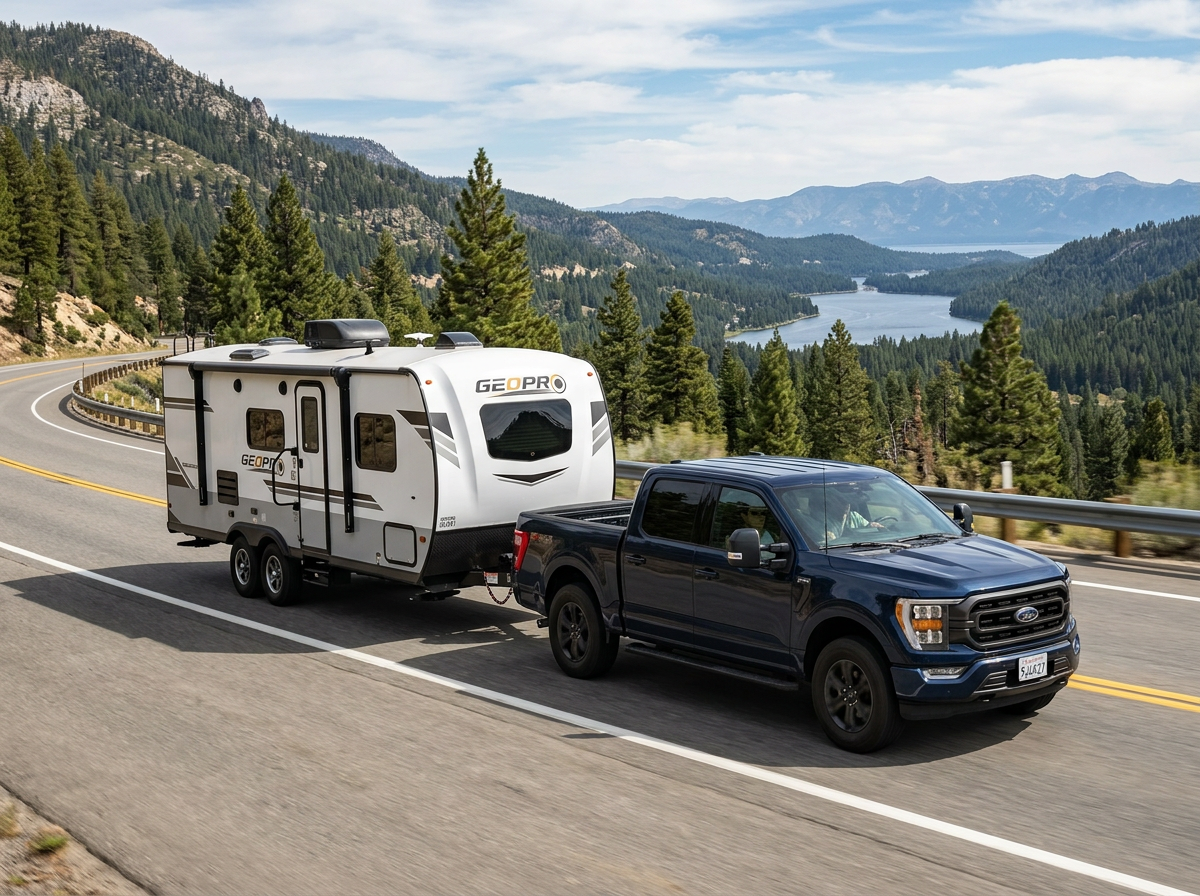
Walk into any towing equipment aisle and the first thing you will notice is a wall of hitches labeled Class 1 through Class 5. The numbers sound straightforward until you realize that picking the wrong one means your trailer could sway on the highway, your bumper could sag, or worse. This guide breaks down each trailer hitch class by actual towing capacity, receiver size, and the real-world vehicles and loads they are built for — so you can match the right hitch to your truck, SUV, or RV without guesswork.
What Are Trailer Hitch Classes
Trailer hitch classes are a standardized rating system that groups hitches by towing capacity and receiver tube size. The Society of Automotive Engineers (SAE) defined these classes so that any Class 3 hitch, regardless of brand, fits the same receiver size and handles roughly the same weight range.
Five classes cover the full spectrum:
- Class 1–2: Light-duty, bolt onto car frames and crossovers
- Class 3: Medium-duty, the most common class for trucks and SUVs
- Class 4–5: Heavy-duty, built for full-size trucks and commercial use
The class number is not just marketing. It directly maps to your vehicle frame strength, the trailer weight you plan to pull, and the receiver size that connects hitch to ball mount. Skip this step and you risk exceeding your vehicle gross trailer weight rating (GTWR) — which is both dangerous and, in most states, illegal.
Class 1 & 2 — Light-Duty Towing
Class 1 and Class 2 hitches handle the small stuff. They bolt onto cars, crossovers, and compact SUVs where the frame is not built for heavy loads.
Class 1
- Receiver size: 1-1/4″ x 1-1/4″
- Max GTWR: 2,000 lbs
- Max tongue weight: 200 lbs
- Typical vehicles: Sedans, compact cars, small crossovers
- Common uses: Bike racks, cargo carriers, small utility trailers, jet ski trailers
A Class 1 hitch is essentially a rack mount with light towing capability. You will see these on a Honda Civic or Toyota Camry more often than a truck. They are perfect for a weekend trip with a couple of kayaks or a small cargo tray — not for towing anything with its own axle weight.
Class 2
- Receiver size: 1-1/4″ x 1-1/4″
- Max GTWR: 3,500 lbs
- Max tongue weight: 350 lbs
- Typical vehicles: Midsize sedans, crossovers, minivans
- Common uses: Small boat trailers, pop-up campers, single-axle utility trailers
Class 2 steps up enough to pull a small fishing boat or a teardrop camper. It still uses the same 1-1/4″ receiver as Class 1 but the hitch itself is built with thicker steel and stronger mounting brackets. If you drive a Honda Pilot or Toyota Highlander, this is likely your factory rating.
Class 3 — The Sweet Spot for Most Drivers
Class 3 is where things get real. This is the most popular hitch class on the road for good reason: it handles nearly everything a recreational tower needs while fitting on standard half-ton trucks and full-size SUVs.
- Receiver size: 2″ x 2″
- Max GTWR: 8,000–10,000 lbs
- Max tongue weight: 800–1,000 lbs
- Typical vehicles: Ford F-150, Chevy Silverado 1500, RAM 1500, Toyota Tundra, Ford Ranger, full-size SUVs like Tahoe and Expedition
- Common uses: Campers, boat trailers, enclosed cargo trailers, car haulers, horse trailers
The jump from Class 2 to Class 3 is significant — not just in capacity but in the receiver size change from 1-1/4″ to 2″. A 2-inch receiver opens up a massive ecosystem of ball mounts, bike racks, cargo carriers, and weight distribution accessories. It is the universal standard for consumer towing.
A well-built Class 3 hitch like the Geteen Class 3 Trailer Hitch for Ford Ranger adds a 2-inch receiver to midsize trucks that may have come with a smaller factory option, effectively giving them access to the full range of 2-inch accessories while towing up to 10,000 lbs. For midsize truck owners, it is one of the highest-value upgrades you can make before towing season starts.
Class 4 & 5 — Heavy-Duty and Commercial Towing
Class 4
- Receiver size: 2″ x 2″
- Max GTWR: 12,000–14,000 lbs
- Max tongue weight: 1,200–1,400 lbs
- Typical vehicles: Ford F-250/F-350, Chevy Silverado 2500/3500, RAM 2500/3500
- Common uses: Large travel trailers, multi-horse trailers, construction equipment, enclosed car haulers
Class 4 keeps the 2-inch receiver but adds substantially more steel, thicker mounting plates, and higher-grade hardware. The result is roughly 40% more towing capacity than a Class 3, but it requires a heavy-duty truck frame to handle the load.
Class 5
- Receiver size: 2-1/2″ x 2-1/2″
- Max GTWR: 16,000–20,000+ lbs
- Max tongue weight: 1,600–2,000+ lbs
- Typical vehicles: Ford F-450/F-550, RAM 4500/5500, commercial chassis cabs
- Common uses: Large gooseneck adapters, commercial equipment trailers, heavy construction machinery
Class 5 is commercial territory. The 2-1/2-inch receiver is visibly larger than the standard 2-inch, and everything about the hitch — mounting brackets, weld points, bolt diameter — is scaled up accordingly. Most Class 5 hitches never leave job sites and fleet yards.
Trailer Hitch Class Comparison Table
| Class | Receiver Size | Max GTWR | Max Tongue Weight | Vehicle Type | Best For |
|---|---|---|---|---|---|
| Class 1 | 1-1/4″ | 2,000 lbs | 200 lbs | Cars, compact crossovers | Bike racks, cargo carriers |
| Class 2 | 1-1/4″ | 3,500 lbs | 350 lbs | Crossovers, minivans | Small boats, pop-up campers |
| Class 3 | 2″ | 8,000–10,000 lbs | 800–1,000 lbs | Half-ton trucks, full-size SUVs | Campers, boat trailers, utility trailers |
| Class 4 | 2″ | 12,000–14,000 lbs | 1,200–1,400 lbs | 3/4-ton and 1-ton trucks | Large travel trailers, horse trailers |
| Class 5 | 2-1/2″ | 16,000–20,000+ lbs | 1,600–2,000+ lbs | Commercial chassis cabs | Heavy equipment, commercial hauling |
How to Determine Which Class You Need
Forget the hitch for a minute. Start with three numbers from your specific setup:
- Your vehicle towing capacity — Found in the owner manual or on the driver side door jamb sticker. This is the legal and mechanical ceiling. No hitch class can raise it.
- Your trailer gross vehicle weight rating (GVWR) — The maximum the trailer weighs when fully loaded. Not the dry weight listed in the brochure — the actual loaded weight including water, gear, and fuel.
- Tongue weight — Roughly 10–15% of your loaded trailer weight should press down on the hitch ball. So a 5,000-lb trailer needs at least 500 lbs of tongue weight capacity.
Once you have those numbers, match the hitch class that covers your tongue weight and GTWR with at least a 20% margin. Building in headroom means you are not running the hitch at its absolute limit every trip.
Example: If your loaded camper weighs 4,500 lbs with 500 lbs of tongue weight, a Class 3 hitch rated for 8,000 lbs gives you plenty of headroom. You could technically get away with a Class 2 on some vehicles, but you would be right at the limit — one steep grade or sudden stop away from a problem.
Installation and Safety Considerations
Once you know your class, the install matters just as much as the rating. A Class 5 hitch bolted on with the wrong torque is no safer than a Class 1.
Frame mounting: Most Class 1–2 hitches bolt to the bumper or unibody. Class 3 and above mount directly to the vehicle frame. Always check that your frame is clean, rust-free, and undamaged at the mounting points before installation.
Torque specs: Every hitch comes with a torque specification for the mounting bolts. Use a torque wrench. Over-tightening can strip threads or crack the frame; under-tightening lets the hitch shift under load.
Rust and maintenance: Hitches sit under the vehicle, exposed to road salt, rain, and mud. Look for powder-coated or anti-rust finishes — they add real years to a hitch life. Even a coated hitch should get a visual check for rust around welds and bolts at the start of each towing season.
Safety chains and wiring: A hitch is only half the connection. Safety chains crossed under the coupler, a properly seated ball mount, and functional trailer lights are just as critical. Test lights every time — it takes 30 seconds and a dead brake light at night is a fast way to get pulled over or worse.
If you are still unsure which class fits your setup, the Geteen Trailer Hitches Guide walks through the selection process step by step. And if your vehicle falls into the Class 3 range, the Geteen shop has 2-inch receiver hitches with anti-rust gloss black powder coat designed specifically for trucks and SUVs that see real road time.